


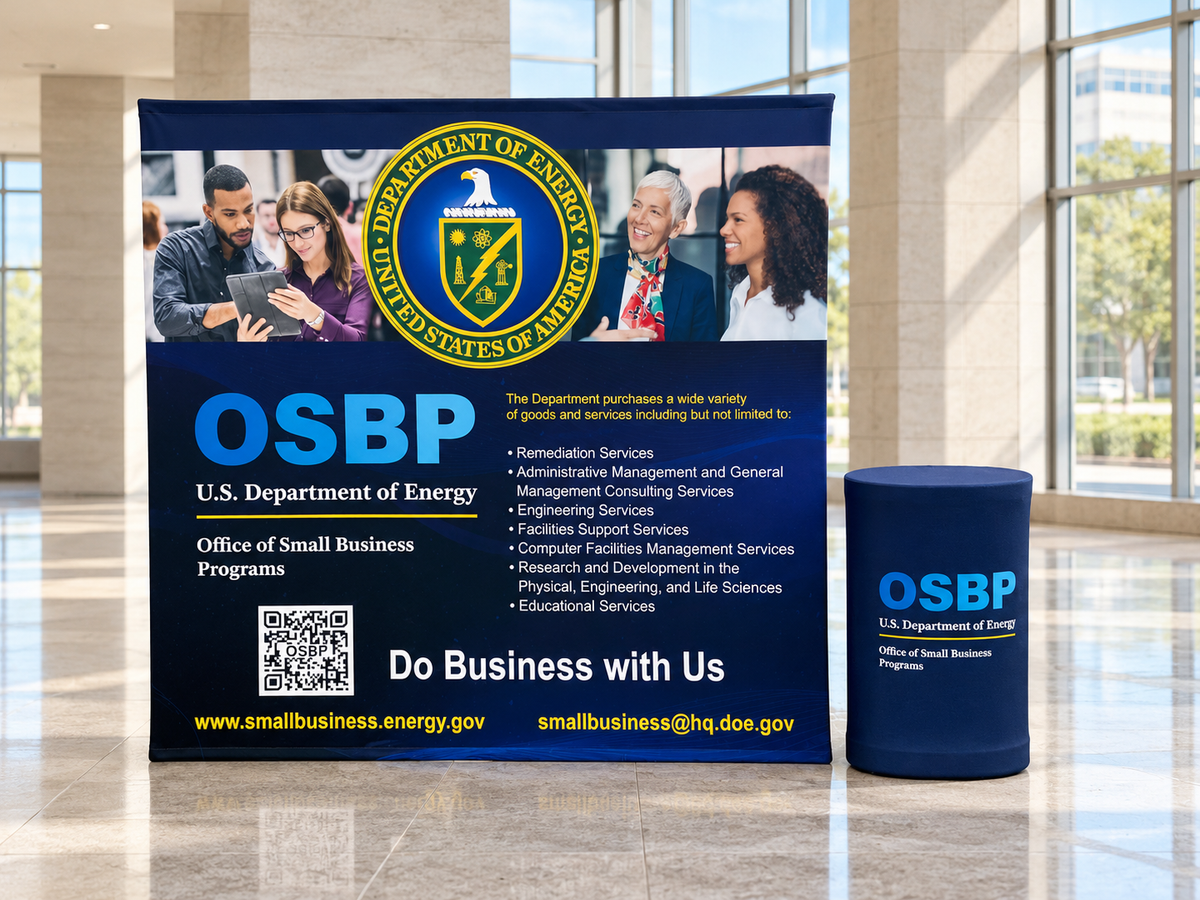
Choosing between a pop up display and an SEG display starts with understanding the terms. “Pop up” usually describes how the frame opens. “SEG,” short for silicone edge graphics, describes how the fabric attaches to the frame. Some displays combine both features, so compare the complete system rather than treating the labels as opposites.
As September events get underway, the practical differences become easier to see: who sets up the booth, how the display travels, and whether you need to change its configuration between shows.
What makes a display a pop up
A pop up trade show display typically uses a collapsible frame that expands for setup and contracts for storage. Depending on the model, the graphic may attach with hook-and-loop fasteners, graphic panels, or a channel system.
This frame style is worth considering when you repeatedly need a branded backwall in a similar space. To understand the setup process, review instructions for the exact model. Confirm whether the graphic stays attached during packing, which parts require separate installation, and how the stabilizing feet fit.
Our pop up trade show displays provide a starting point for comparing these systems.
What makes a display an SEG display
An SEG graphic has a flexible silicone strip sewn around its edge. That strip fits into a channel in a compatible frame, tensioning the fabric across the display face.
The frame itself may be collapsible, assembled from separate sections, or part of a modular exhibit. SEG displays can also be illuminated or non-illuminated. The graphic attachment method alone does not tell you whether lighting is included or whether panels can connect.
For example, BrightLine modular backlit displays combine SEG graphics with illuminated modular framing. Compare the specific kit and its components when deciding whether that approach suits your booth.
Compare the work involved in setup
Ask what happens after the carrying case opens. An expanding frame may need relatively few assembly steps, while a frame built from sections may require careful placement of connectors and labeled parts. An illuminated display adds electrical connections and a power check.
Fabric installation also takes practice. Review the manufacturer’s sequence so the graphic seats evenly without unnecessary pulling. If one employee will handle events, check the assembled height, the weight of individual pieces, and any recommended assistance.
A short setup video of the exact system is more useful than a general claim that a display is easy to assemble.
Compare packed dimensions and transportation
Portable does not always mean suitable for every vehicle or airline. Look at the number of cases, their outside dimensions, and their loaded weight. Include accessories and lighting components in your calculation.
For events reached by car, check the vehicle opening as well as the available cargo area. For air travel or shipping, review the carrier’s current size and weight rules before choosing a system. At convention venues, investigate material handling separately from transportation to the building.
Check compatibility before planning future changes
If you expect to alternate between booth sizes, ask which configurations the manufacturer supports. A display designed as a single backwall may serve that purpose well without converting into separate panels. A modular system may offer additional arrangements, but those arrangements can require specific connectors, feet, graphics, or other parts.
Replacement fabric must also match the frame. Keep the manufacturer, model, exact dimensions, and current template on file. Similar-looking graphics should not be assumed interchangeable.
Which display should you choose for repeated events
Start with your most common booth size and your most demanding travel requirement. Then compare systems against your staffing, setup, lighting, and graphic replacement needs. This keeps the purchase connected to the way you actually exhibit.
Send Affordable Exhibit Displays your usual booth size, travel method, and number of people available for setup. We can help you compare suitable options without relying on product names alone.


